Wednesday, June 22, 2016

New Additions to The Hanging Wall Shelf

Chronica Domus
At last, the hanging wall shelf is full!
Photo: Chronica Domus

Last October, I wrote about my Morandi-inspired hanging wall shelf.  After arranging a small collection of earthenware vessels upon it, I was delighted to discover that sufficient room remained for additional bits and bobs to be added over time.

Chronica Domus
The hanging wall shelf as it looked last October
Photo: Chronica Domus

As you may have guessed, I'm a bit of a gatherer type.  I was certain it would not be long until an interesting and attractive object presented itself, begging to be added to the hanging shelf.

My opportunity came last December during a visit to London's Portobello Road Market, which I wrote about, here.  Rummaging through the crates and boxes of Mr. Peter Adams' stall, my husband and I selected several of the diminutive treacle and toffee colored ink pots and salt glazed polish vessels to take home with us.

Chronica Domus
Spoilt for choice!
Photo: Chronica Domus
We also snapped these up:

Chronica Domus
Photo: Chronica Domus

What, you might be asking yourself is Virol?  Well, we too were wondering the same thing.  It turns out that Virol was a perplexing concoction of bone marrow, among other ingredients, conceived during the early twentieth century.  It was marketed to British mothers of young children and carers of the elderly and infirm.  I suppose one could describe Virol as a type of super food of its day.

An early metal sign depicting an earthenware jar of Virol

Virol promised everything from "perfectly moulded features, clear bright eyes, firm flesh with good healthy colour, and well-formed limbs ... a Virol constitution".  Sign me up please!  Or, maybe not.  I have a sneaking suspicion that Virol may have fallen flat on its face in its attempts at exciting the gastronomic juices of this gentle author.

Our Virol bottles look perfectly at home alongside their earthenware companions, would you not agree?

Chronica Domus
Photo: Chronica Domus

The taller of the two measures a mere three and a half inches, and the smaller bottle is a fraction shorter.

Now that I've filled up my hanging wall shelf, I'm afraid I haven't a clue where to put this charming little fellow, which I could not pass up when doing my rounds of The Alameda Antiques Faire earlier this month.

Chronica Domus
A 19th century ink pot complete with the potter's fingerprint embedded in the glaze for posterity
Photo: Chronica Domus

No matter, for I am sure it won't be too long until I find an appropriate resting place for it.  Do I see another hanging wall shelf in my future?  Perhaps so.

Wednesday, June 15, 2016

An Impromptu Visit to San Francisco's "Little Italy"

Chronica Domus
Columbus Avenue lies at the heart of North Beach
Photo: Chronica Domus


Last Sunday was one of those rare occasions that found us with no social obligation to fulfill. We arose late, bleary eyed from having spent the previous evening at home with friends enjoying refreshing cucumber gimlet cocktails (it was, after all World Gin Day, and we simply could not let that slip by without a nod to Mother's Ruin, could we?).  The house was clean and orderly, our "to do" list had been checked off, and Patience our daughter was away for the weekend visiting relatives. The gaping hole in our schedule was unfamiliar territory but, rather opportune as I discovered.

"Why not trot down to North Beach for a late lunch and an afternoon walk?" I said to my husband.  And so, we did.

North Beach is a vibrant historic neighborhood located at the northeasterly corner of the city.  The area was home to the Beat poets of the 1950's and 1960's and to large numbers of American Italian families.  North Beach is often referred to as "Little Italy" for reasons that will immediately become apparent upon landing on the main drag, Columbus Avenue.

Chock full of Italian delicatessens selling specialty ingredients for the home cook, pizzerias, restaurants, bakeries, and cafés, North Beach is undeniably Italian in flavor. It is also home to two of the city's largest Catholic churches.

We just happened to be walking by when we spotted this fellow dashing across the street to meet his friends for lunch:

Chronica Domus
A Capuchin friar takes his leave of the church of St. Francis of Assisi
Photo: Chronica Domus


If you look carefully at the following photograph, you will see a few canine companions accompanying their owners who are seated at the church steps.  St. Francis of Assisi was, after all, a friend to all animals.  A small ceremony to bless them had just concluded shortly before our arrival, which coincided with the Feast of Saint Anthony being celebrated by the friars.

Chronica Domus
Photo: Chronica Domus


Also unbeknownst to me when I suggested we hot foot it to lunch, was that our impromptu visit coincided with the annual North Beach Festival.  That explained why the place was positively humming with masses of locals and tourists alike.

Chronica Domus
People, people, everywhere!
Oh, and the Transamerica Pyramid rising from the foot of Columbus Avenue
Photo: Chronica Domus


Food and beverage stands were set up along the length of several blocks of the neighborhood, together with small stages that would showcase a variety of live entertainment. Every restaurant and café was seemingly packed to the rafters.

Chronica Domus
Are we ever going to find a place to eat?
Photo: Chronica Domus


Sidewalk tables were occupied as well, with diners enjoying both the hubbub and crystalline blue skies. There would be no summer fog to dampen anyone's spirits this day.

Chronica Domus
Ah, finally, a table at Rose Pistola awaits us
Photo: Chronica Domus


We sought sustenance and sanctuary in the soothing atmosphere of Rose Pistola, which was, thank goodness, situated away from the melee of festival attendees.  The food here is simply marvelous. Trattoria-like in its simplicity, fresh, and impeccably prepared.  In a word delizioso!

Too full for dessert (at least I was), we waddled across the road to Mara's Italian bakery where we stocked up on some pastries, Italian style, for later.

Chronica Domus
One could easily be forgiven for mistaking this scene for so many like it in Italy
Photo: Chronica Domus


The selection of sweet treats on offer at Mara's was almost overwhelming.  Cannoli, biscotti, torrone... the delectable list goes on and on.

A much needed walk was in order to jolt us out of our postprandial torpor.  Down the road and around Washington Square we went, passing even more Italian bakeries, if you can believe it, until we found Saints Peter and Paul church.

Chronica Domus
 The twin spires rise 191 feet into the sky (notice how diminutive the substantial Victorian house appears by comparison)
Photo: Chronica Domus


Once inside, we toured the impressive space, which boasts an altar made of snow-white Carrara marble and a copy of Michelangelo's sculpture Pieta.

Chronica Domus
Photo: Chronica Domus


Now that we've had a chance to play tourist, it was time to hop into the motor car and head home.

Chronica Domus
Up, up into the sky!
A typical view of what one sees when traveling along the famously steep roads of San Francisco 
(better be sure the breaks and clutch are in good order)
Photo: Chronica Domus


Ah, finally home, and look what we brought with us to enjoy later in the day with coffee.

Chronica Domus
These Sfogliatelle pastries are almost too good-looking to eat... almost!
Photo: Chronica Domus

I do hope you enjoyed tagging along with us on our impromptu visit to North Beach. If you too are San Francisco bound in the future, do please plan on visiting this vibrant neighborhood for a taste of old San Francisco.  Perhaps not on a busy festival weekend though.

Thursday, June 9, 2016

Arcane Dining Oddities: Papier-Mâché Wine Coasters

Chronica Domus
English Regency papier-mâché wine coasters nestle a pair of ring-neck 
decanters of the same period
Photo: Chronica Domus


I have long admired the elegant appurtenances of well laid dining tables of Regency England. Aesthetically restrained in form, they were the antithesis of excessive fussiness associated with Victorian tastes. And, unlike the confounding array of dining implements that materialized during Victoria's reign, which have long passed from favor (ice cream forks anyone?), basic dining utensils and table articles of the Regency are still recognizable to modern diners.  There is, however, one very practical item that has regrettably vanished from the landscape of the dining table; the papier-mâché wine coaster.

Chronica Domus
Our small but growing collection of early-nineteenth century papier-mâché wine coasters
Photo: Chronica Domus


Bottle coasters, decanter slides, or wine coasters are all terms used to describe the same thing.  Its purpose is to facilitate the act of sliding or coasting wine or spirit decanters to one's fellow dining companions with ease.  Baize, a coarse woolen material typically green in color, lines the bottom surface of this useful table article. It is the baize that ultimately enables the wine coaster to glide, or coast, across the polished surface of a dining table.

Chronica Domus
Although faded, the baize on this wine coaster, circa 1810, is original
Photo: Chronica Domus


Of course, if the table is to be set with a cloth, wine coasters are checked in their purpose and impeded from sliding. They do still function toward more practical ends, keeping them relevant, at least in our household. Who, I ask you, enjoys the labor of removing wine stains from their napery? Not I! So, when these coasters are set beneath our glass decanters, they do an admirable job of corralling the errant dribble of wine which may escape even the most careful of host.  One's lily white tablecloth remains just so.

Chronica Domus
Evidently, the tipsy Prince Regent chose wisely when selecting the color of his tablecloth. His over-worked wine coaster stood little chance of containing the waterfall of drips created during his bacchanalian bender


You may be asking yourself why on earth such a thing might be constructed of paper, as moisture is its natural enemy.  As you may well imagine, papier-mâché wine coasters are somewhat of a rarity nowadays, at least when compared to their sturdier cousins born of silver and wood.  I am confident their scarcity has everything to do with the fact that great numbers of them were ruined through use, despite their lacquered surface which, in theory, promised a more durable finish.

Chronica Domus
This pair of deep green colored wine coasters, circa 1815 to 1820, is in exceptional shape due to the lacquered surface remaining intact
Photo: Chronica Domus


Ultimately, the passage of time would lead to their demise.  The modern habit of serving wine directly from the bottle did not help their cause either.  Although the majority of today's vintners employ modern filtration methods, eliminating pesky sediment and a genuine need to decant, we still opt to press our pretty decanters and their corresponding coasters into service. Besides, red wines in particular can benefit from aeration.  Surprisingly, so do whites. Unless you use a dedicated wine refrigerator that is perfectly programmed to cool white wines, most standard refrigerators overly-cool them.  Decanting lessens the chill factor making the experience of sipping a glass or three of Sauvignon blanc a far more delightful experience. Cheers!

Chronica Domus
Here's a snap of a dinner party we held for friends this past April showing the placement of our decanters and papier-mâché coasters at the head and foot of the dining table (prior to my husband having filled them). So much nicer than plonking bottles of wine directly on the table, would you not agree?
Photo: Chronica Domus


The papier-mâché wine coasters in our collection all date to the first half of the nineteenth century and are all English.  They make the perfect foil for the Regency period ring-neck decanters that rest within them during our dinner parties.

I purchased my first wine coaster, seen in the following photograph, from a dealer in London about a dozen years ago.  He told me that black coasters are as scarce as hen's teeth, which, of course immediately made me wonder if I would ever find another like it to assemble a pair. All these years later, I am still on the hunt. The sole decoration embellishing this coaster, which dates to about 1810, is a fine charcoal colored stripe around its top and base, sublimely subtle and rather lovely to my eye.

Chronica Domus
Photo: Chronica Domus


A more fanciful version for these papier-mâché wine coasters came in the form of a trolley.  Oh, the spectacle of sending these delightful vehicles into action and observing them being wheeled from one happy imbiber to the next!  I imagine such antics could easily get a little out of hand after downing one too many.  That is, if I were anywhere near them I mean.

Chronica Domus
A rare pair of papier-mâché decanter trolleys, circa 1850-20, could be yours for
the princely sum of $12,850


I am not certain what this lozenge-shaped early toleware piece was intended for, but when I spotted its gilded tendrils and vine leaf decoration, I had to add it to my collection for use as a wine coaster.

Chronica Domus
What could this early toleware object have held?
Photo: Chronica Domus


Luckily for me, it is perfectly proportioned to hold a pair of early-nineteenth century barrel-shaped cut glass spirit decanters. I am, to say the least, thrilled with it.

Chronica Domus
Photo: Chronica Domus


Perhaps you too will unearth a wine coaster on your travels to a preferred antiques shop or an auction room.  If ever you do, I would encourage you to consider its purchase.

Chronica Domus
Photo: Chronica Domus


For the next time someone asks you to "Pass the port, please!", you'll not only be doing so with style and ease, but with the knowledge that your tabletop is to remain unmarred from the effects of a good vintage.

Friday, May 27, 2016

Last Call for The Oscar de la Renta Retrospective

Chronica Domus
Sarah Jessica Parker and Taylor Swift's 2014 Met Gala gowns form part of the marvelous Oscar de la Renta retrospective currently showing at San Francisco's
de Young Museum 
Photo: Chronica Domus


Nota bene: Please excuse the rather shoddy photographs that accompany this post. Flash photography, for obvious reasons, was prohibited.

My teenage daughter Patience finally convinced me to do something no other person has managed to accomplish since 2005.  She asked me to take her to the de Young Museum in San Francisco's Golden Gate Park to view the Oscar de la Renta world premier retrospective.  Now, let me get something off my chest before I return to the subject at hand.  I have had occasion to darken the doors of the newly constructed museum on just one occasion since it replaced the beautiful old building, which was sadly demolished. At that time, I experienced such an adverse reaction to the oppressive appearance of the new building's exterior, and dysfunctional interior space, that I vowed never to step foot inside the place again. Well, eleven years later, I find myself sharing this tale with you and reluctantly returning, all in the name of motherly love.  How's that for never saying never!

Despite my strong opinions of the museum's architecture, this really is a must-see retrospective. I suggest you too hot foot it into town for a gander before things wrap up in just a few short days (May 30th to be exact). Gazing upon one-hundred and thirty beautifully designed and constructed pieces of haute couture greatly eased my discomfort at having to return to this frightful building.  Frankly, just thinking about it sends shivers down my spine, and not in a good way either. Here is an example of what I mean ...

Chronica Domus
The grim museum tower looms ominously beyond the park's mature trees
Photo: Chronica Domus


... and, things only worsen as one approaches the building:

Chronica Domus
Am I about to enter an art museum (can I even find a doorway?), a futuristic copper-clad prison, or a reject from the set of Battlestar Gallactica?
Photo: Chronica Domus


Thank goodness the retrospective was tucked away downstairs in the Herbst Exhibition Galleries where one could ignore the disjointed space of the remainder of the museum with its odd little corners that lead you to, well ...nowhere. Oh how I miss the old grand entrance, the elegance of the building's architectural style, and the ease of flow through the galleries.

Photographed in 1925, the old de Young museum building received some updates during the 1940s but was sadly demolished to make way for the new discombobulated structure


Now that I've got that off my chest, we can return to the subject at hand, Mr. de la Renta's dreamy creations.  Patience and I were happily whisked away to the glamorous and rarefied world of high fashion, glitz, and feminine glamour as we meandered through the exhibition. André Leon Talley did an outstanding job of showcasing the designer's creations which are viewed in five themed galleries. Examples of  Mr. de la Renta's clothing spanned the entirety of his storied career, beginning in the early 1960's in New York  ...

Chronica Domus
Photo: Chronica Domus


... right the way through to his final Met Gala confections.

Chronica Domus
Nicki Minaj never looked so good as when dressed by Mr. de la Renta in a billowy green taffeta gown
Photo: Chronica Domus


The galleries were curated with an eye towards the designer's Spanish-influenced creations ...

Chronica Domus
Photo: Chronica Domus


... and his Russian phase, reflecting Konstantin Makovsky's painting, The Russian Bride's Attire  ...

Chronica Domus
Photo: Chronica Domus


Chronica Domus
An extraordinary custom wedding ensemble from 1985 in burgundy silk velvet and taffeta
Photo: Chronica Domus


Eastern cultures were also represented ...

Chronica Domus
Sable tail trimmed pants and a red silk crepe de chine tunic worn by the New York
socialite Nan Kempner 
Photo: Chronica Domus


A witty recreation of Vogue's December 2010 spread showcasing emerging models from Japan, South Korea, and China held center court in a gallery of its own to great dramatic effect.

Chronica Domus
 Photo: Chronica Domus


Below is the original published photograph taken by Steven Meisel, which was itself based on Cecil Beaton's 1948 photograph of dresses designed by Charles James.


Alas, all these visions of glorious sugarplum ballgowns made me hanker for an opportunity to dress to the nines in beguiling confections and dance the night away on the arm of a handsome stranger. Ah well, a girl can certainly dream; gardening attire is more my style nowadays.  The great outdoors inspired Mr. de la Renta in creating these glamorous floral themed dresses, presented here in a tranquil light-filled gallery complete with wall projections of inspiring luscious formal gardens.

Chronica Domus
Of course, my own gardening togs are not too dissimilar to these delightful gowns (notice the blue wheelbarrow in the background conveying the obvious hard graft performed by these elegant creatures)
Photo: Chronica Domus


What spurred my teenage daughter's interest in viewing this exhibition was her keen interest in learning about the fashion trends of the 1940s through the early 1960s.  She was particularly taken with the selection of gowns on display which demonstrate that great style was still achievable in the latter decades of the twentieth century and into the present day. Like many teenage girls, Patience is an adoring fan of the songstress Taylor Swift, who always displays her fashion credentials impeccably at splashy events.  I mention Miss Swift because below is a snap shot of the exquisite pink gown she wore to the 2014 Met Gala.  As you can see, Patience is one happy starstruck fashionista.

Chronica Domus
Photo: Chronica Domus


And, as every good museum goer knows, one must always exit through the gift shop. Yesterday was no exception.

Chronica Domus
"Look mummy, it's Taylor in Oscar's dress"
Patience caught flipping through the Oscar de la Renta exhibition catalog and having her breath taken away by that dress, yet again!
Photo: Chronica Domus


If you find yourself in town this long holiday weekend, I encourage you to make plans to visit this marvelous show and discover why Oscar de la Renta is one of fashion's greatest icons.  I'm not sure where this exhibit will land next, but Bay Area residents and visitors alike have until Monday to feast their eyes on the most gorgeous works of wearable art created in fabric.

Monday, May 23, 2016

A Fondness For Rhubarb

One of the glories of spring, at least for me, is the appearance of the season's first rosy stalks of rhubarb available at the market. This past Saturday, I had the pleasure of excitedly filling my wicker basket with almost three pounds of the stuff during a jaunt to the city's most popular farmers' market. What a lucky girl I am!

Chronica Domus
Photo: Chronica Domus


I love the taste of rhubarb and have since childhood.  I recall my favorite school dinners - or the midday meal we British children erroneously knew as such - coming to a delightful close whenever rhubarb crumble was served for pudding dessert.  Lashings of hot custard would gleefully be poured atop the crumble making for an even more decadent treat. Today, while I still adore rhubarb crumble, puddles of cool heavy cream have taken the place of the custard.

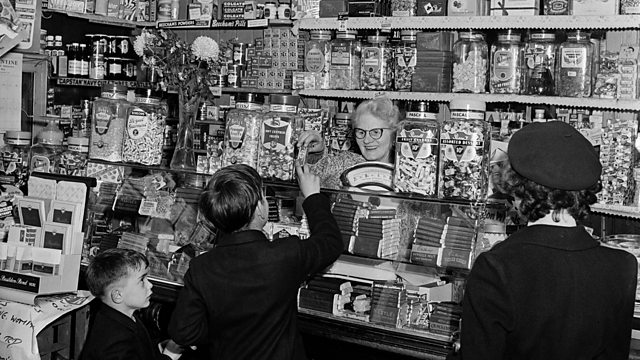
Rhubarb with custard was such a popular childhood treat that whenever I found myself, along with my two sisters, down at the local sweet shop with five pennies worth of spending power to hand, I would always load up my white paper baggie with old-fashioned rhubarb and custard hard boiled sweets. While my sisters took their dear time in making their confectionery selections - which I'm certain must have driven the poor shopkeeper to distraction - I was always the decisive one.

"Oh, I'll take one of those and two of these please"


Even today, whenever I travel to England, I still pack a couple of small bags of these childhood indulgences into my hand luggage for the journey back to California. Old habits truly do die hard.

For reasons I cannot fathom, rhubarb is not as popular in the United States as it is in England. Perhaps its piquant tangy flavor fails to appeal to the masses.  Or, might it be the fact that the leaves of rhubarb are deleterious if consumed, scaring some away from experimenting with it in the kitchen? Rhubarb was first introduced into the United States during the late-eighteenth century by a European farmer in Maine.  Over time, it became a popular pie filling, earning its nickname of "pie plant". Curiously, on the few occasions I have spotted rhubarb making an appearance in a pie recipe, or for that matter in jam form, it has always been accompanied by strawberries to sweeten the deal.  I am most decidedly not a fan!  In my ever-so-humble opinion, rhubarb should always remain the star of the show; a rosy leading lady deserving of her own uncrowded stage.

Although rhubarb is by definition a vegetable, it is treated as a fruit in the culinary world.  Sugar is rhubarb's best friend.  Believe me when I say that even though I am a fan of tart and acidic flavors, dousing rhubarb in heaps of sugar barely makes a dent to its mouth-puckering powers.

I would feel as though I have done a good deed were I to persuade you to try this spring vegetable for yourself the next time you stumble upon it at your local market.  I'm certain that once you've sampled the deliciously fragrant and fleshy stalks, cooked into an easy-to-make crumble, you too will wake up to rhubarb's tarty pleasures.

Chopped and in the pan, the rhubarb is ready to be enrobed in heaps of sugar and butter over the heat of a low flame
Photo: Chronica Domus


If you find yourself making the rhubarb crumble recipe found here, I suggest you double the amount of sugar required for the filling as I find the extra sweetness more capably manages to balance the tartness of the rhubarb.  Oh, and there is no need to seek out the super-fine sugar that is called for in the recipe.  The granulated variety works just as well.

Chronica Domus
Even a child can make this easy peasy crumble topping
Photo: Chronica Domus


Chronica Domus
A generous helping of rhubarb crumble ready to be bathed in heavy cream and washed down with a pot of French pressed coffee - what a delightful Sunday afternoon treat!
Photo: Chronica Domus


Tell me, have you had occasion to sample rhubarb and if so, how was it prepared and what did you think of it?


Sunday, May 15, 2016

Signs of Life

As much as I anticipate the arrival of the more familiar harbingers of spring, few things can compare to the joy these little fellows bring to my life.

Chronica Domus
Photo: Chronica Domus


I happened upon them two weeks back as they reveled in the early afternoon dappled light created by the weeping willows that line a small local lake.  Fresh from what must surely have been one of their earliest swimming lessons, courtesy of their attentive mother, the five student goslings waddled shakily onto terra firma and to the safety of the grassy verge.

Chronica Domus
Mother Goose and her five goslings in training
Photo: Chronica Domus


Chronica Domus
Photo: Chronica Domus


I realized, while captivated by this annual sighting of goslings, that spring was once again in full force.  I also grasped the fact that my year had slipped by, all pell-mell and topsy-turvy. Was it really the ides of  May already?

Chronica Domus
Photo: Chronica Domus


These tiny signs of new life remind me that it's time to bring some order to my world and get back to the pleasurable pursuit of blogging on a more regular schedule.

Chronica Domus
Photo: Chronica Domus


So, here I am.  I do hope you'd like to waddle along for the ride as I put finger to keyboard and attempt to chronicle some of life's more pleasant moments...as I see them.

Hope springs eternal.

Related Posts Plugin for WordPress, Blogger...