As far back as I can recall, I've had an eye - or rather two - for detail. I blame my parents for the affliction, which can be both a blessing and a curse. My father for example, now retired, was highly skilled in his profession as a tailor; details meant the world to him. My parents would actively encourage my sisters and I to observe, compare, and contrast in order to better understand how the smallest detail - be it a button or the cut of a lapel - might add to or detract from the overall appearance of a garment.
The smallest details don't only fascinate me, but can at times become my impetus for telling a story and the lens through which I see a larger picture. Take for example the spoons seen in the photograph below.

At first glance, these two early American coin silver spoons appear to be quite unremarkable. Devoid of decorative detail, aside from a simple monogram, one could easily be forgiven for not offering a second gander. In fact, both the teaspoon and the large serving spoon possess rather a severe aspect to their design. There is a reason for this, and a fascinating one at that.
You see, it is believed that "coffin-end" spoons, as these are called, were fashioned by American silversmiths to commemorate the death of George Washington in 1799. The tip of the spoon's handle was clipped by the silversmith to imply the form of a coffin. This was a design which remained popular until about 1810.
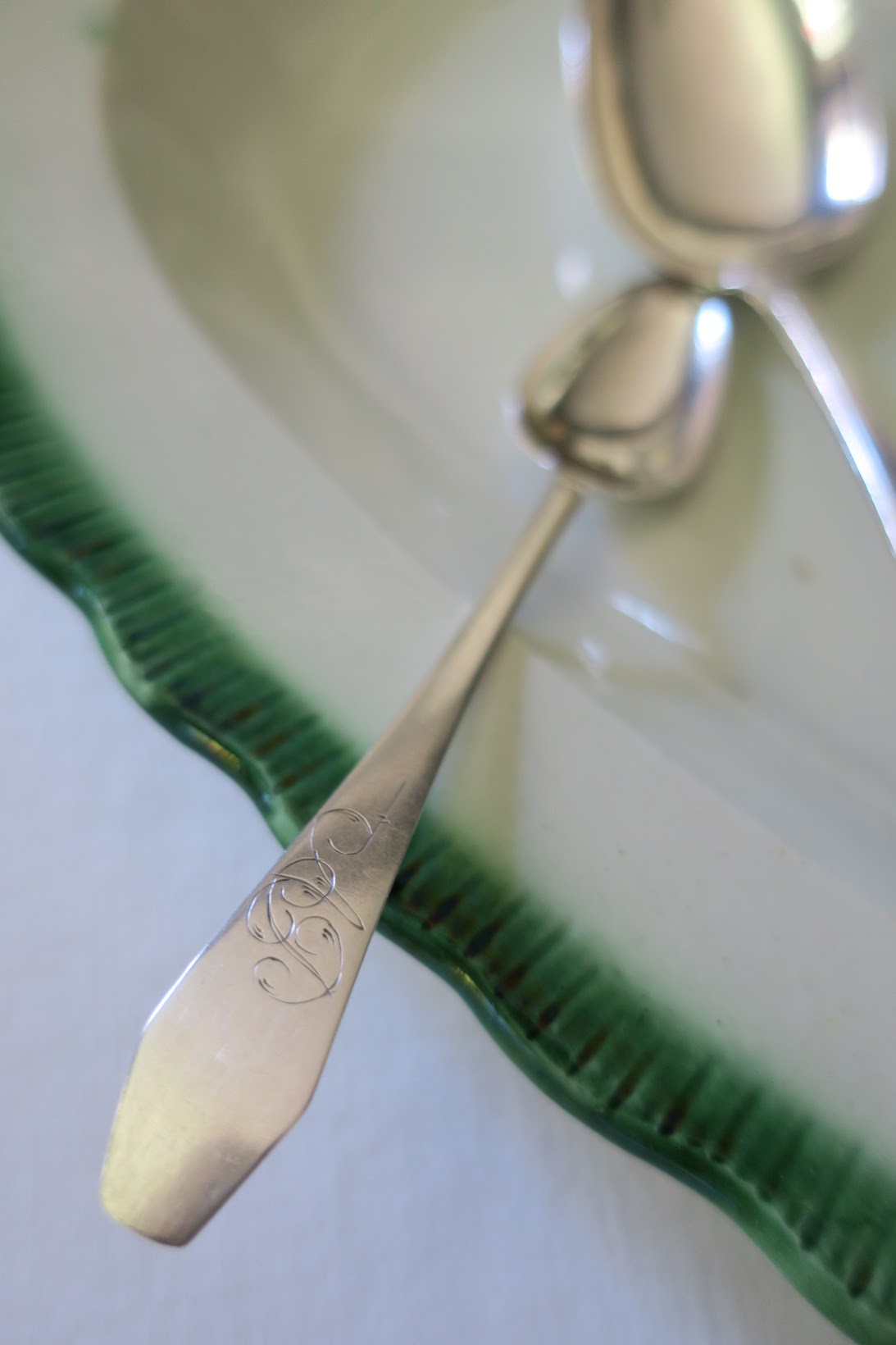
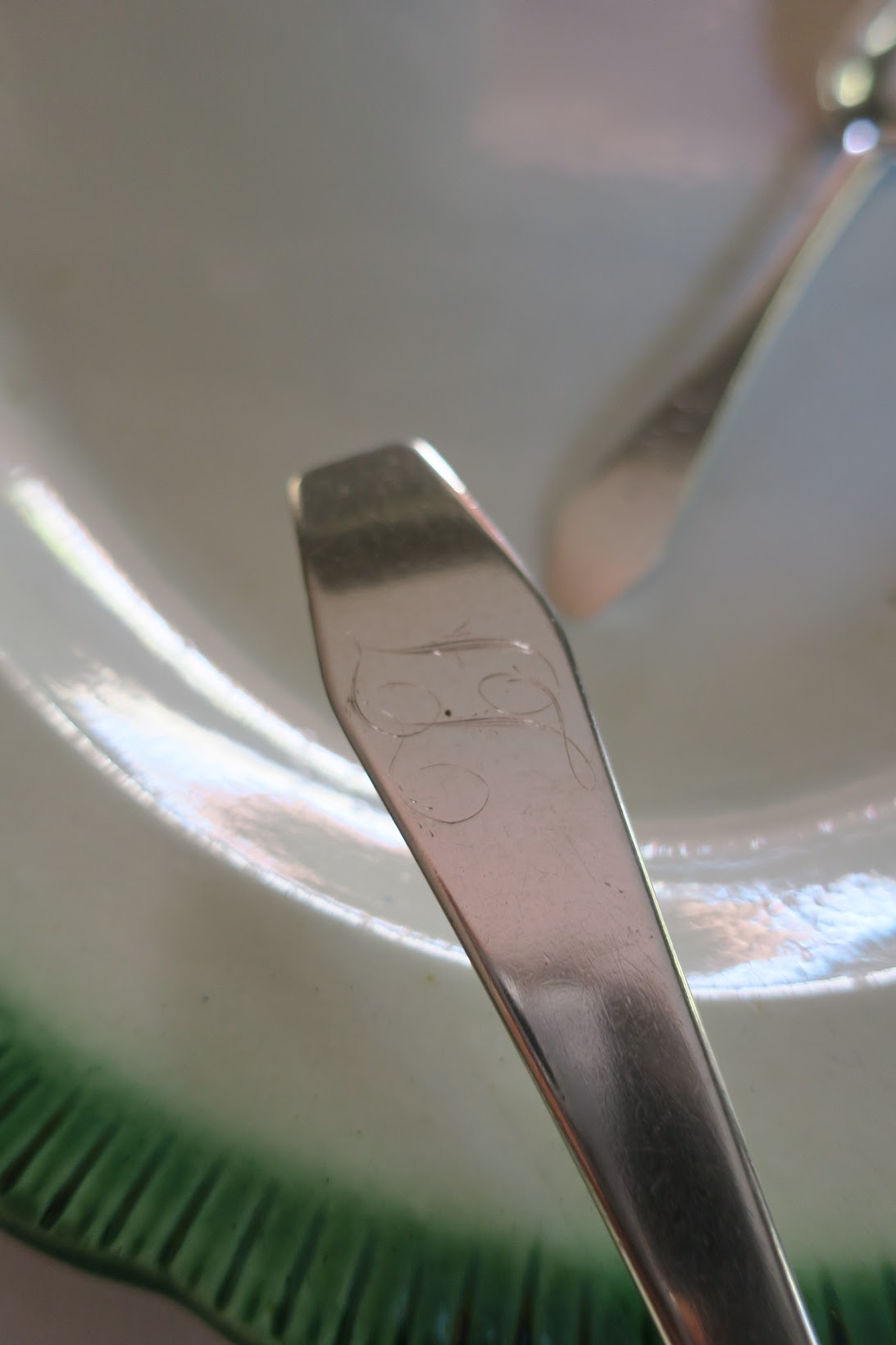
Having culturally attained the honorary title of "Father of His Country", George Washington, America's first president, was largely revered at the time of his death. His passing was felt deeply across the young nation. Many citizens of his newly born nation were so moved as to actually don mourning clothes for months thereafter. As one can imagine, it was not long until all manner of commemorative household goods and artworks appeared to mark this solemn occasion.
I have owned the diminutive coin silver teaspoon for a number of years and acquired it without prior knowledge of any significance to its design. It was much later that I learned about the association of the coffin-end handle and its connection to Washington's death. Naturally, when I saw the large serving spoon for sale at a recent antiques fair, I had to have it.

The dealer from whom I purchased this piece had acquired it as part of a sizable lot of early American silverware assembled by a local professor. The professor had thoughtfully tagged each item with an informative label noting details of the item's origin and year it was made. The preceding photograph shows the label still attached to the serving spoon on the day I purchased it.
As this is a post about a presidential-related item, I thought it would be only fitting to photograph said item on an early green shell-edge pearlware platter. Thomas Jefferson, who followed in George Washington and John Adams' footsteps to become America's third president, utilized this pearlware pattern at Monticello, his mountaintop home in Virginia. Fragments of it have been excavated from the grounds surrounding Monticello's kitchen yard. Today, visitors to Monticello will be delighted to view an entire service of this attractive earthenware laid upon the dining table of the chrome yellow painted dining room.

And, of course, what could one serve from such presidential dining accoutrements? Why, peas of course! Not just any old peas, mind you, but the very same heirloom variety, Pisum sativum 'Prince Albert', selected by Thomas Jefferson to grow within the vegetable garden at Monticello. Some of you may recall the post I wrote in June 2014, found here, on how I came to include these scrumptious peas in my own garden.


I do hope you enjoyed learning about these rather obscure silver spoons and their association with the passing of America's first president, along with revisiting momentarily the dining table of our third. Between these two men, of course, rests much of the reason for such a uniquely American day of celebration, on this fourth day of the seventh month.
Happy Independence Day everyone!
The smallest details don't only fascinate me, but can at times become my impetus for telling a story and the lens through which I see a larger picture. Take for example the spoons seen in the photograph below.

Photo: Chronica Domus
At first glance, these two early American coin silver spoons appear to be quite unremarkable. Devoid of decorative detail, aside from a simple monogram, one could easily be forgiven for not offering a second gander. In fact, both the teaspoon and the large serving spoon possess rather a severe aspect to their design. There is a reason for this, and a fascinating one at that.
You see, it is believed that "coffin-end" spoons, as these are called, were fashioned by American silversmiths to commemorate the death of George Washington in 1799. The tip of the spoon's handle was clipped by the silversmith to imply the form of a coffin. This was a design which remained popular until about 1810.

The distinct shape of this early American coin silver teaspoon tells us that it was fashioned to commemorate the death of George Washington in 1799
Photo: Chronica Domus

A view of the flowing monogram engraved upon the coffin-end handle of the large serving spoon
Photo: Chronica Domus
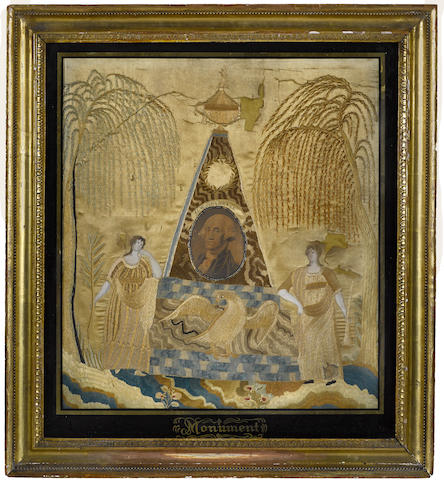
Having culturally attained the honorary title of "Father of His Country", George Washington, America's first president, was largely revered at the time of his death. His passing was felt deeply across the young nation. Many citizens of his newly born nation were so moved as to actually don mourning clothes for months thereafter. As one can imagine, it was not long until all manner of commemorative household goods and artworks appeared to mark this solemn occasion.

Oh how I kick myself for not bidding on this ink and silk mourning needlework picture when it came up for auction in San Francisco a few years ago - what was I thinking?
I have owned the diminutive coin silver teaspoon for a number of years and acquired it without prior knowledge of any significance to its design. It was much later that I learned about the association of the coffin-end handle and its connection to Washington's death. Naturally, when I saw the large serving spoon for sale at a recent antiques fair, I had to have it.

Article Number 12 in the collection of a local professor was a coffin-end serving spoon made by silversmith Judah Hartt of Middletown, Connecticut in 1800, now happily ensconced in my own collection
Photo: Chronica Domus
The dealer from whom I purchased this piece had acquired it as part of a sizable lot of early American silverware assembled by a local professor. The professor had thoughtfully tagged each item with an informative label noting details of the item's origin and year it was made. The preceding photograph shows the label still attached to the serving spoon on the day I purchased it.
As this is a post about a presidential-related item, I thought it would be only fitting to photograph said item on an early green shell-edge pearlware platter. Thomas Jefferson, who followed in George Washington and John Adams' footsteps to become America's third president, utilized this pearlware pattern at Monticello, his mountaintop home in Virginia. Fragments of it have been excavated from the grounds surrounding Monticello's kitchen yard. Today, visitors to Monticello will be delighted to view an entire service of this attractive earthenware laid upon the dining table of the chrome yellow painted dining room.

Two Washington coffin-end coin silver spoons rest upon a green shell-edge pearlware platter, a pattern favored by Thomas Jefferson at Monticello
Photo: Chronica Domus
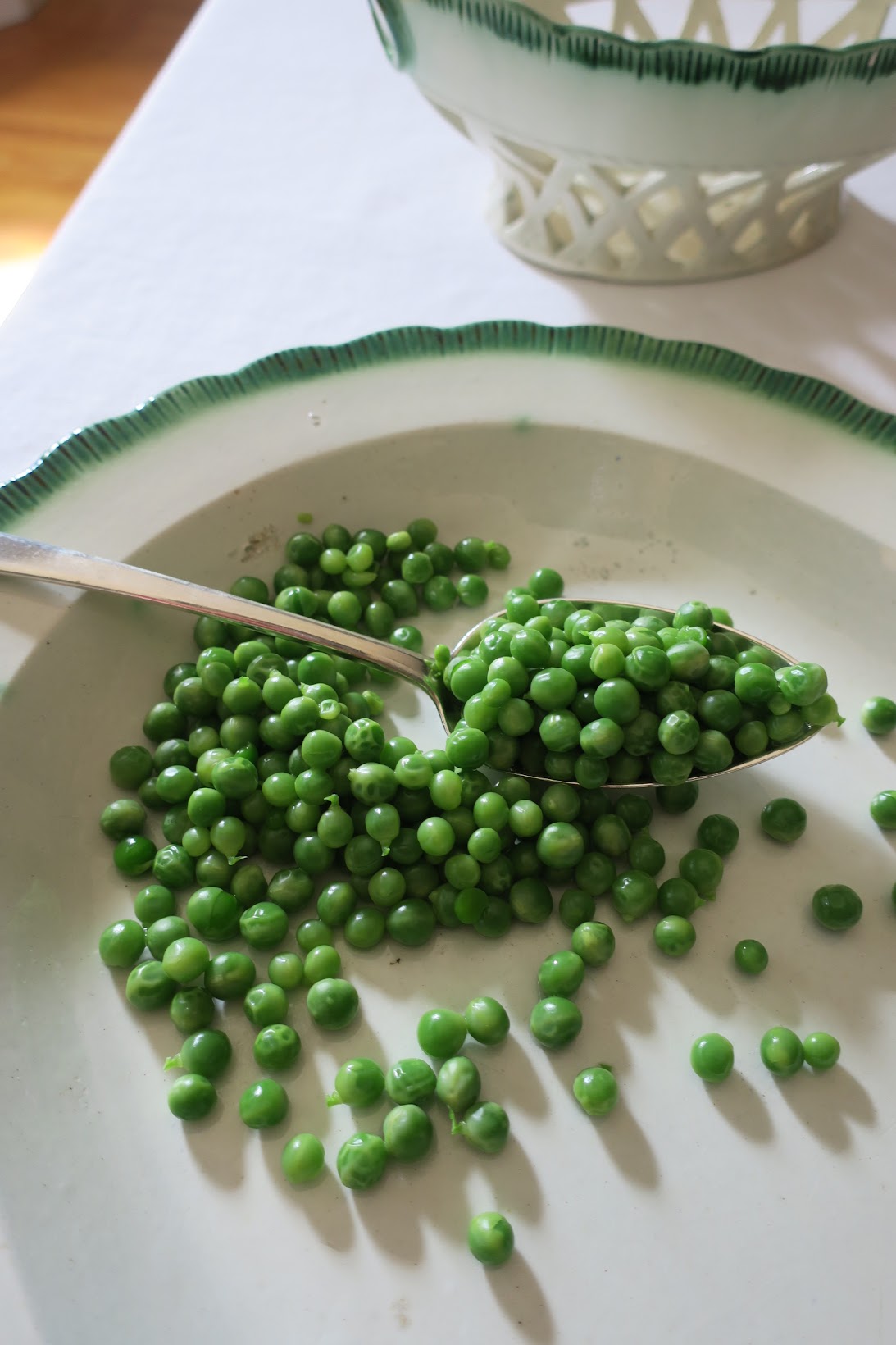
And, of course, what could one serve from such presidential dining accoutrements? Why, peas of course! Not just any old peas, mind you, but the very same heirloom variety, Pisum sativum 'Prince Albert', selected by Thomas Jefferson to grow within the vegetable garden at Monticello. Some of you may recall the post I wrote in June 2014, found here, on how I came to include these scrumptious peas in my own garden.

Thomas Jefferson's peas are still growing in my vegetable patch, from seeds gathered after each year's harvest since planting the original package, purchased from Monticello's garden shop in 2012 - this particular addition to our meal was collected early on the morning of June 24 this year
Photo: Chronica Domus
Photo: Chronica Domus

Here are those peas, served upon the same shell-edge pearlware pattern so favored by Thomas Jefferson ...

... and scooped from a commemorative George Washington coffin-end serving spoon
Photo: Chronica Domus
I do hope you enjoyed learning about these rather obscure silver spoons and their association with the passing of America's first president, along with revisiting momentarily the dining table of our third. Between these two men, of course, rests much of the reason for such a uniquely American day of celebration, on this fourth day of the seventh month.
Happy Independence Day everyone!