Sunday, June 28, 2015

A New Mode For "Hosting" Celebrations

Chronica Domus
Happy Birthday, darling!  Now, how much are we to charge our guests for the pleasure of their company this evening?

My good friend Jeannette and I have much in common.  We are of like-mind on many topics, but none more so than on matters of social comportment and interaction. We have opportunity to talk on an almost daily basis, during nightly trots around the neighborhood with Mavro, my trusty senior canine companion. Lately, a hot topic of conversation that has us both fired up is the insidious progression toward not living up to one's responsibilities as a host.  Whenever the subject of yet another miscreant host arises, we preface the story by saying "I have a new low to share with you". And, more than likely, it usually is.  Let me explain.

My mother taught me that as a host I have an obligation to look after my guests for the duration of their time in my company.  By this I mean that if I extend an invitation to celebrate my birthday over dinner at home, for example, I am responsible for providing my guests the food and drink that is appropriate to such occasion, and within my budget. This obligation remains the same if I were to hold such a celebration at a restaurant of my choosing. As a host, I would be responsible for the food and drink consumed by my guests during the evening's festivities.  I would either pre-arrange a set menu to be served, along with the accompanying beverages, or communicate to my guests that they are free to make their selections from the restaurant's menu.  The burden of responsibility for footing the bill should entirely fall upon my shoulders as the host.  Would you not agree?

Jeannette recently shared a story with me of how she and her husband Harvey received an invitation to join their friends, a married couple, in celebrating the husband's birthday at a restaurant of the couple's choosing, over dinner and drinks. A group of about a dozen or so friends joined the couple for the celebration.  At the conclusion of the evening, the wife announced that she was thrilled that everyone had been available to mark her husband's milestone birthday.  She then proceeded to acknowledge the "kindness" of the restaurant staff in their willingness to divide the bill equally among the number of guests. Jeannette and Harvey were taken aback. They would never dream of inviting a group of friends to a celebration of theirs and proceed to essentially charge their guests for the privilege.  Jeannette continued with her story, explaining that she and Harvey were unfairly thrust into an awkward and embarrassing situation as they watched each guest scramble to come up with the goods.  One couple was overheard bemoaning the fact that they did not eat or imbibe nearly as much as the others, having only ordered small dishes the likes of which are typically found as starters on most restaurant menus.  Another guest lacked sufficient cash to dole out to the hostess. When the hostess cottoned on, she suggested that those without cash could pay for their food with their own credit card which, as you can imagine, resulted in all manner of issues for the wait staff.  What a mess!  As if all this were not enough to make you run in the opposite direction, the hostess had the gall to suggest that everyone continue with the after party at a nearby bar.  Needless to say, the majority of guests made their excuses and scarpered.  And, rightly so.  A host should never burden his or her guests with a financial responsibility in order to entertain, all the more so without forewarning.  If you, as a responsible host, cannot afford to entertain friends at a fancy restaurant, or any restaurant for that matter, then don't.  Either stay home and cook a meal to share with your beloved friends, order pizza to be delivered, or choose some other form of entertainment that befits your own pocket and not your guests'. This, I believe, is a fundamental tenet of hospitality in my book.

Chronica Domus
It's your birthday?  By all means, go ahead and throw a cocktail party, just don't expect your guests to pay for it

When Jeannette had finished relaying her story, I shared one of my own. "Jeannette, you think that was bad, listen to this. I have a new low".  I proceeded to tell the tale of a memorial gathering my family and I recently attended.  It was held at a club that was actually owned by one of the deceased's very close relatives, a wealthy figure in the entertainment world.

Stepping into the club, which was packed to the rafters with friends and family, we noticed an open mic by the stage for the benefit of those wishing to relay stories of our dearly departed acquaintance. We also spotted a few trays of hors d'oeuvres being passed around, which was a good thing indeed.  It was now about 1 o'clock in the afternoon and I don't think many of us had eaten lunch on our way over to the gathering.  Several people we spoke with had traveled a fair distance to be there. The bar of the venue, located at the opposite end of the room from the stage, was open so my husband offered to get us a round of gee and tees.  He was quite alarmed to discover that although the venue was closed to the public for a "private event", the bar was actually running as if it were a regular business night. All drinks had a ten dollar cover charge.  What?  Wait a minute?  Should it not be the responsibility of the host to look after his guests, even at a gathering to commemorate the dead?  If the deceased's relative wished to volunteer his venue for the occasion, which was indeed a nice gesture, but did not want to burden himself with the expense of providing mourners with alcoholic beverages, then why not just leave the bar closed.  Surely it would have made better sense to lay out a small selection of beverages, alcoholic or otherwise, on top of the bar so that guests could help themselves.  Everyone in attendance had shown up at the club to pay their respects to the deceased's immediate family, not to line the pockets of the close relative.

Jeannette agreed that this sorry tale was indeed a new low in terms of one's obligations as a good host.  This was not a charity function, nor a business commitment, such as a group work luncheon. This was a private memorial where some small degree of hospitality was to be expected by the guests in attendance.

Tell me, am I preaching to the choir?  Would you not agree that this insidious trend of a host burdening his guests with the tab is a bit of a slap in the face?

Thursday, June 18, 2015

When Life Gives You A Lemon Tree...

...you make lemonade, lemon curd, lemon tarts, lemon... well you get the picture. 

Chronica Domus
A taxonomic presentation of Citrus limon 'Eureka' that would make Franz Eugen Köhler proud
Photo: Chronica Domus


When I was a young girl in England, lemons were exotic things.  One was more likely to run into plastic lemon-shaped squeeze bottles full of what approximated real lemon juice than an actual lemon. In fact, I recall my mother buying these novel little pretenders and squeezing the contents onto our pancakes on Shrove Tuesday, on salads to make dressing, and in tea to soothe our sore throats. Any opportunity to acquire the real thing was snapped up with alacrity as my parents believed (and still believe) that most foods doused in lemon taste better.  Perhaps that is where my love of these refreshingly juicy fruits was born.

When my husband and I moved into our house many years ago, and my parents traveled from England to visit us in our new digs, they were enthralled by the old lemon tree that stood at the corner of our lot. Lush with bright green foliage and boughs heaving with fruit, my parents thought we'd hit the lemon jackpot. As it turned out, they were right.  "Old Faithful", as I've named our tree, is so prolific it provides a generous bounty year round.  In any given month one can spot both unripened green fruits growing happily alongside cheery yellow lemons.  Ivory colored blossoms, the beginnings of future fruits, are also in evidence through every season.  These glorious blooms, heady with the alluring scent of fresh citrus, draw me in like a moth to flame. I find it nary impossible to walk by them without doffing my wide-brimmed straw gardening hat and taking a few moments to savor their compelling beauty, inhaling deeply as I do. 

The gardener that planted our tree knew a thing or two about which variety of lemon would thrive in our moderate climate.  Old Faithful, which I posit is anywhere from fifty to seventy years old, is a Citrus limon 'Eureka'.  At some point in the 1850's an astute fellow brought Eureka lemon seeds to California from Sicily where they proved a good match for local growing conditions. One would not typically associate northern coastal California's cooler maritime-influenced climes as particularly well suited to the cultivation of citrus, but it is, and I am most thankful for it.

Chronica Domus
A citrus blossom yet to unfurl
Photo: Chronica Domus


Chronica Domus
Ah, if only scent was transmittable through pictures!
Photo: Chronica Domus


Chronica Domus
The elongated thick-skinned fruits of Eureka lemons dangle from Old Faithful's branches
Photo: Chronica Domus


Chronica Domus
A trug of juicy lemons bound for the kitchen
Photo: Chronica Domus


The silvery-grey foggy days we have endured for the past several weeks, so typical for this time of year, seem to have vanished, for now.  Alfresco dining on the balcony always heralds the beginning of these warmer spells and a jug of homemade "Lime-o-nade", as we call it around here, provides just the right note of refreshment on those balmy lazy afternoons.

I squeeze the juice of two large lemons and four limes, add that to a cup of granulated sugar and eight cups of water, toss in a few pinches of salt (the secret ingredient), stir with a wooden spoon, and voila! I promise you will have the most deliciously zingy, restorative concoction from which to sip and revive flagging spirits on dreamy sun-baked days.

Chronica Domus
Won't you join me for a glass or two of Lime-o-nade?
Photo: Chronica Domus


Chronica Domus
More please!
Photo: Chronica Domus


Lemons, either juiced, sliced, or zested, feature heavily in many of the dishes we prepare at home, and our kitchen is rarely without a few of these succulent fruits available at arm's length.  I don't recall ever having purchased a single lemon since moving to our house.  It dawned on me while writing this essay that although I am intimately familiar with the cost of many fruits and vegetables at the farmers' market, I could not honestly tell you the price of a pound of lemons.

One of my favorite desserts is flavored with lemon so, naturally, I enjoy using them to make lemon curd.

Chronica Domus
Homemade lemon curd is creamy and rich and surpasses anything one can purchase in a store
Photo: Chronica Domus


Lemon curd is an English invention which strikes me as odd because I can only imagine the difficulties, and cost, of growing and obtaining these Mediterranean fruits during the early nineteenth century when curd was first concocted.  Although lemons arrived in England as far back as the sixteenth century, only the very wealthy would have been able to acquire them.  I imagine too that over the centuries attempts at cultivating these sun-loving fruits would have been attempted but always within the confines of a glasshouse where they could endure the harsh winters of the British Isles far better than if grown outdoors.

Chronica Domus
Scrumptious lemon curd tart awaits devouring
Photo: Chronica Domus


Lemons not only make excellent flavoring for food, but their astringent qualities are well suited to getting one's house clean and sanitized.  Lemons are non-toxic and a green alternative to the modern commercially available cleaners that line countless supermarket shelves.  Removing odors from wooden cutting boards, for example, is a breeze when the cut side of a lemon is rubbed against the surface to eliminate strong garlic and onion smells.  A paste of lemon juice and salt, or baking powder, rubbed on copper makes an effective and natural cleaner.  Pots and pans will be gleaming in very short order.  The kitchen porcelain sink is also cleaned with the cut side of a lemon and a sprinkling of baking powder. Those pesky sink stains and grease vanish in a flash restoring the surface, once again, to it's shiny bright white.

Chronica Domus
A natural cleaner, lemon juice has a multitude of uses around the house, including refreshing one's wooden cutting boards to rid them of foul food odors
Photo: Chronica Domus


Lastly, one of the more rewarding aspects of our lemon loot is sharing it with friends and neighbors. Only last week, when hosting the first outdoor luncheon of the year for our dear friends Steven and Connie, we sent them home with not one, but two bags bursting with lemons so that they too could reap the rewards of Old Faithful.

What would you do if life gave you a lemon tree?

Thursday, June 11, 2015

It's A Little Blurry Around Here


For the past month or so, I've noticed that whenever I attempt to upload the amateurish photographs that help illustrate my posts to Blogger, something rather odd happens. Not so noticeable perhaps at first glance, but when one expands the images to their full capacity, they become rather blurry.

I was beginning to wonder if I should pay a visit to my ophthalmologist.  It then crossed my mind that my trusty little camera might have packed it all in and demanded its retirement.  Prodding further into this sorry state of affairs, having already wasted several frustrating hours fiddling with settings I didn't even know existed, I came to the realization that both my camera and my spectacles were performing as expected. There was only one thing left to do and that was to throw myself down the rabbit hole that is Google and figure out exactly what it was that was causing my crisply detailed images to become a blur.

The answer, as it turns out, is that Blogger has deemed it appropriate to degrade the quality of my carefully shot images and publish them at a mere fraction of their original size and quality.  My hands were tied.  I had absolutely no control of how my images were published.  To anyone who cares about such things, you can only imagine the frustration this has caused.

I've finally discovered a hack to restore my previous month's foggy image postings to their maximum effect; a pain to be sure, but a step I shall have to endure for all future published photographs.  I have now applied the hack to each and every photograph of the last four postings.

Below is an example of what it is I'm talking about (don't forget to stretch/expand the images for full effect):

Chronica Domus
A degraded image of an Iris I included in a recent post
Photo: Chronica Domus


Chronica Domus
The higher quality original image - with hack applied - insuring it is published the way it was meant to be seen
Photo: Chronica Domus

Please bear with me while I work out a better solution to this time-consuming "trick".  I shall resume my regularly scheduled postings within a few days but wanted to keep you all abreast of the goings on behind Chronica Domus.


Wednesday, June 3, 2015

Arcane Dining Oddities: The Mystery Trident Fork Revealed

Well, that was a lot of fun!  Thank you all for playing along and taking a stab at demystifying the dining utensil I featured in my prior post.  I enjoyed reading your guesses and was not at all surprised that some of you thought the fork would be used to help carve or serve meat.  It is certainly hefty enough and would be quite suited to lifting a slice or two of roast beef or ham to place upon one's plate during Sunday lunch.

Chronica Domus
Won't you help yourself to a slice or two of bread?
Photo: Chronica Domus


Well done to those of you who posited the fork had something to do with bread.  The trident-shaped utensil was indeed designed for the express purpose of delivering one's daily bread safely to one's plate without actually touching said bread in the process. In all honesty, I find this all a little too genteel for my liking and much prefer to pass the bread plate or basket to my guests so that they can help themselves with their very own fingers.  It is efficient and not at all fussy, don't you agree? However, I have found other uses for this beautiful arcane piece of cutlery so it remains a practical item when entertaining even to this day.  We pass the fork alongside a plate of  hot baked potatoes, or whenever we serve individual Yorkshire puddings at dinner, or popovers for brunch.  During the summer months, when watermelons are at their most flavorful, a bread fork is the perfect delivery system for helping oneself to large pieces of the refreshing fruit.

The bread fork was a popular item at formally set tables in the United Kingdon during the mid-nineteenth century and into the early decades of the twentieth. Obviously, Bertie Wooster and his natty friends at the Drones Club managed quite well without.

One of the infamous bread roll tosses during a typical luncheon at the Drones Club
Nota bene: This particular author would love nothing more than to join in on the rollicking good fun being had by all and might soon attempt such antics at her own dining table under the right circumstances.

It was once considered quite impolite to touch most food items with bare hands, but bread was one of the few exception to this rule. As such, it really baffles the mind as to why these forks were even invented.  Ironically, polite society dictated that once a slice of bread or roll was safely deposited on a diner's plate with the use of the bread fork, it was perfectly acceptable to break it apart with fingers for consumption.

I believe my fork was made toward the end of the nineteenth century and was likely marketed to middle-class families due to the quality of the materials and design. I've seen similar bread forks constructed of lighter weight pressed metals that were electroplated in nickel silver with mother-of-pearl handles. I've also encountered handles of simulated ivory and also of stag antler, the latter of which was one of the dearer (sorry for the pun) examples available for purchase.

Now that we are all well versed in the use of this arcane dining oddity, I wonder how long it will be until you too run into one for sale at an antiques shop or flea market. Perhaps when you do, you'll consider taking it home and finding a new use for it which is, after all, part of the fun of owning these things.  At the very least, it will make for an interesting dinner conversation.

Sunday, May 31, 2015

Arcane Dining Oddities: Poseidon's Trident? Devilish Pitchfork?

Chronica Domus
Can you guess the purpose of this fork?
Photo: Chronica Domus


Hot on the heels of Lindaraxa's marvelous post about a mystery dining implement that she so deliciously teased her loyal readers with - and quite frankly left this author befuddled and on the edge of her seat awaiting the big reveal - comes a mystery object from my own collection.

I have toyed with the idea of publishing a post on my Poseidon's trident (or would that be a devilish pitchfork?) for a number of weeks now and Lindaraxa's tantalizing conundrum finally provided the impetus I sought to get my act in gear.  I suspect, like me, you too may enjoy a little puzzle to rattle your gray matter.

Admittedly, the task of this treasured little item delivers something far less exotic to hungry diners at table than Lindaraxa's fork.  The trident is made of sterling silver and is mounted to a faux-ivory handle by way of a decorative collar.  Aside from this minor decoration, the seven and a half inch utensil is really rather spare, which to my eye makes it all the more appealing.

I espied my mystery object laying in a glass case of an antiques shop in England about a dozen years ago. When I asked the assistant what it was that I was looking at, and she enlightened me, well, there was really only one thing for it.  I had to have it.

Chronica Domus
Photo: Chronica Domus

Can you guess the purpose of this fork?  Remember, no cheating through the use of your search engine now!


Wednesday, May 27, 2015

A Ramble Through The Woods and Yonder

 Chronica Domus
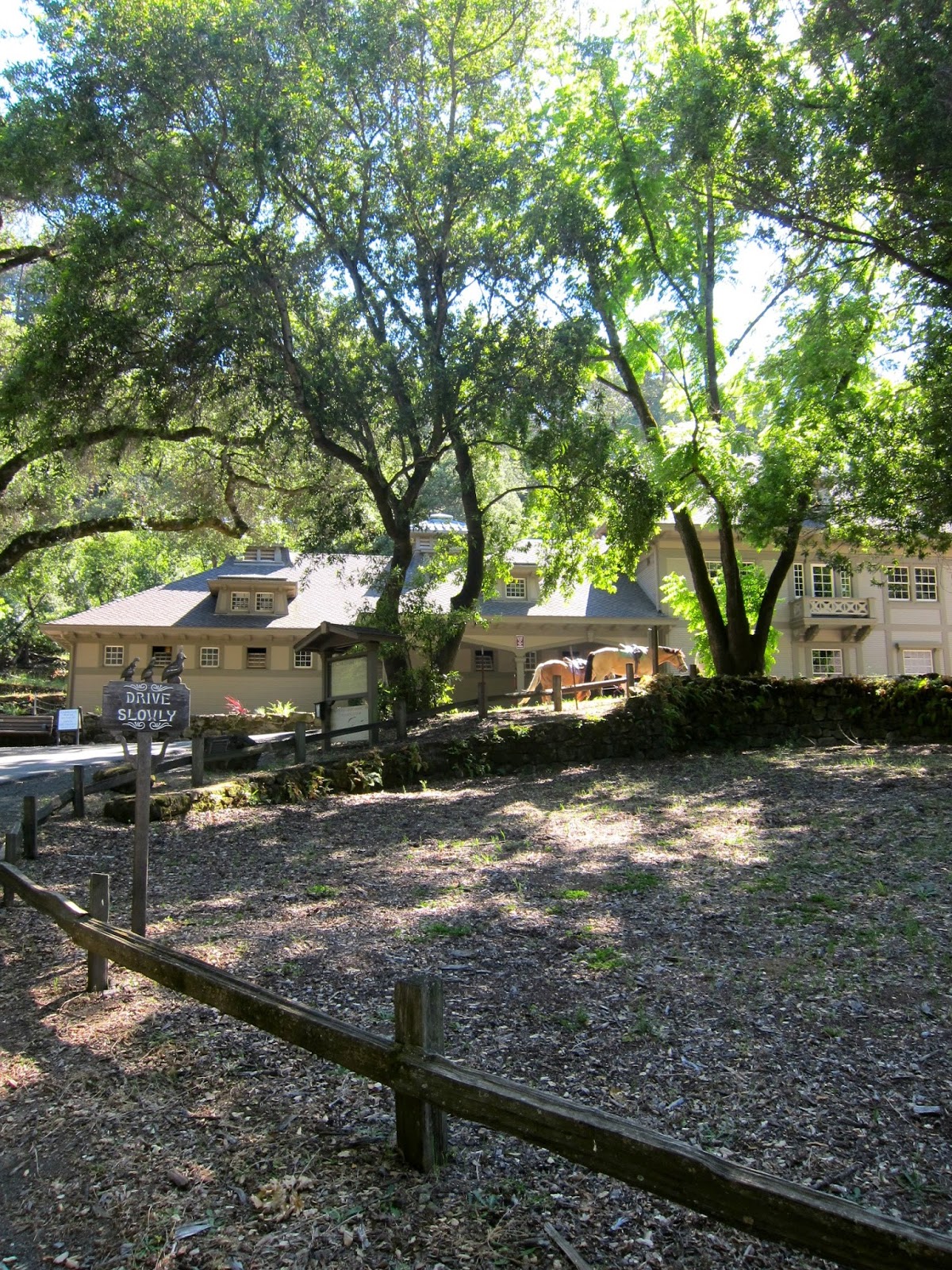
A family of quail carved atop a charming sign cautions drivers as they approach Wunderlich Park and the historic Folger Stable
Photo: Chronica Domus


In spite of the fact that I do not participate in any sporting activity, I do enjoy exercising in the great outdoors.  And by that I mean on Shanks' pony.  There is nothing better than a good old-fashioned invigorating ramble to rouse the spirit. Besides, if you are fortunate enough to have the use of two healthy feet and a sturdy pair of walking shoes, that is all that one requires to get moving.  No special training necessary.  No fancy equipment required. So, having found ourselves without social obligations this past Sunday, we telephoned our dear friend Gavin, an indefatigable walker, and invited him to join us on a trek through one of the Bay Area's prettiest hiking trails.  We fled south by motor for about forty-five minutes until we reached the environs of Woodside and Atherton, smack in the middle of horse country.  The area acts as home and playground to many of Silicon Valley's wealthiest captains of (tech) industry, due to its proximity to the main business hubs of San Francisco and San Jose. The serenity of the surrounding countryside is also a factor as to why the place is a magnet for its tony residents.

It was a perfect day to enjoy the spectacular trails of Wunderlich Park.  The lower than usual May temperatures afforded us the opportunity to amble along the Alambique trail without overheating. Additionally, spurts of vigorous wind rustling the tree tops also kept us cool.

Chronica Domus
The towering Redwood trees of Alambique trail
Photo: Chronica Domus


Chronica Domus
We encountered this spectacular view from the top of the trail, elevation 1,430 feet 
(notice the fog rolling in from the right)
Photo: Chronica Domus

At some point on our hike, we must have deviated from the woodland trail as we found ourselves walking along flower-spangled meadowlands.

Chronica Domus
Entering the bucolic meadow
Photo: Chronica Domus


I was pleasantly surprised to see several varieties of flora in bloom this late in the season. Sadly, my botanical knowledge falls short of identifying the flowers you see in the following photographs. Perhaps one of you knowledgeable readers would care to enlighten me, thank you.

Chronica Domus
Ah, this one I know to be an Iris
Photo: Chronica Domus


Chronica Domus
Could this be some type of Lily?
Photo: Chronica Domus


Chronica Domus
This one has me stumped ...
Photo: Chronica Domus


Chronica Domus
... as does this ...
Photo: Chronica Domus


Chronica Domus
.. and this pretty little blue one  ...
Photo: Chronica Domus


Chronica Domus
... yup, this one too (a wild Sweet Pea perhaps?)
Photo: Chronica Domus


Chronica Domus
Finally, one that I recognize, a Thistle ...
Photo: Chronica Domus


Chronica Domus
... and this is Briza maxima, or Rattlesnake grass
Photo: Chronica Domus


All in all we covered about eight pleasant miles, meandering hither and yon, until we were once again reunited with our motor.

Chronica Domus
Goodbye pretty meadow
Photo: Chronica Domus


At this point, I'd like to add a word or two about appropriate attire if you too decide to commune with nature, as we did.  By donning comfortable walking clothes that fall within Nature's subdued color palette, you choose to walk in harmony with Nature, not against her.  The entire point of being in such splendid environs is not to draw glaring attention to yourself with your hi-tech neon athletic shoes or zippy colored sports clothing.  Please, do us all a favor and leave those for the gym workouts. Here, browns and greens and other neutrals should rule for the enjoyment of all who seek the tranquility that such open spaces provide.  Our like-minded friend Gavin and I wore our olive green-colored quilted jackets atop neutral comfy walking clothes.  One dapper gent we crossed paths with and exchanged pleasantries looked absolutely marvelous in his straw hat and togs of muted tone.  He even accessorized with a pair of binoculars hanging from his neck.  Well done, sir!

One of the highlights of Wunderlich Park is a visit to the ritzy and meticulous Folger family horse stable.

Chronica Domus
Approaching the Folger Stable
Photo: Chronica Domus 


Chronica Domus
A portion of the stable complex
Photo: Chronica Domus


Designed by Arthur Brown Jr., who was also responsible for the design of San Francisco's city hall and opera house, the stable is built in the so-called "Victorian Gothic style".  Constructed in 1905 for the coffee magnate, James A. Folger II, the building is an absolute joy to visit, even if you're not of the horsey persuasion.

A vintage Folger's coffee advertisement appealing to "crotchety connoisseurs" and "affable amateurs" alike

As we were here on a Sunday afternoon, the carriage room museum was unfortunately closed preventing me from photographing it to its fullest potential for your enjoyment.  

Chronica Domus
Photo: Chronica Domus


I last visited the museum several years ago and was impressed with the pristine carriages on display alongside artifacts and information on the local history of the area and the Folger family that owned the surrounding land.

Chronica Domus
I managed to snap this photograph of a carriage through the museum's window
Photo: Chronica Domus


My enjoyment of the stable was buoyed by several of the exquisite equines in residence, including this beautiful fellow.

Chronica Domus
Hello, my name is Winchester ...
Photo: Chronica Domus

And this one.


Chronica Domus
... and I'm Chespin
Photo: Chronica Domus


The tack and harness room was clean and orderly, much like the immaculately kept stable.

Chronica Domus
Photo: Chronica Domus


Chronica Domus
Saddles at the ready
Photo: Chronica Domus


One could not detect even a whiff of odor to betray the fact that horses are in residence. The redwood paneling of the stable's interior was harvested from the estate grounds and stained to imitate costly mahogany.  Gas lighting and cobblestones complete the elegant look of the interior.

Chronica Domus
The Folger stable is kept in tip-top condition
Photo: Chronica Domus


Chronica Domus
This beautiful horse is being readied for grooming
Photo: Chronica Domus


Chronica Domus
Happy trails
Photo: Chronica Domus


Once we had poked around the stable and yard, it was time to head north but not before a brief pit-stop in the town of Burlingame .  Having become ravenous from all the walking and fresh air, we happily devoured a scrumptiously prepared late luncheon early dinner with a glass or two of wine, swiftly undoing all the benefits gained from our calorie-busting walk. Oops!

It had been a fulfilling day of bracing exercise set among a backdrop of spectacular scenery, reminding me once again why I so adore living where I do.

Are you the sporty type or do you, like me, prefer a ramble through woods and yonder?


Monday, May 18, 2015

Arcane Dining Oddities: The Slop Bowl

Chronica Domus
Photo: Chronica Domus


It has been sometime since I last published a post on Arcane Dining Oddities, so today I'd like to remedy this by introducing you to the lowly slop bowl.

With such an unappetizing name, you might well be asking yourself  "what, in heaven's name, is a slop bowl"?  Is it, perhaps, a bowl from which to serve thin gruel? Might its purpose be to hold a dog's dinner?  A slop bowl would certainly make an exceedingly stylish kibble bowl, particularly if one were the owner of a small pampered pooch.  This all sounds like fodder for one of my Relics Reimagined posts, come to think of it.

Chronica Domus
"No, the silver slop bowl does not contain your dinner you naughty little dog!"

Made of metal or some type of ceramic, a slop bowl's sole purpose was for the collection of dregs from the bottom of one's tea cup.  Leftover tea, along with any tea leaves, would be placed into the bowl in preparation for pouring another round of tea.  Once considered an essential piece of tea time equipage, the slop bowl, alas, is no longer to be found as part of a modern day tea service.

Its demise may have had something to do with the popularity of the dreaded tea bag, convenient in a pinch to be sure, but please loose tea, always!  The invention of strainers, held over tea cups to catch errant tea leaves as they escape from a pot's spout, has also rendered the slop bowl inessential.

Chronica Domus
Obviously these rakish dandies have misplaced their slop bowl, along with the host's saucer - the horror of it all!


Of course none of this obsolescence matters to me as I take pleasure in using my slop bowls and have no trouble setting them to good purpose.  It only dawned on me when taking the photographs to accompany this post that I've somehow amassed an embarrassing number of these rather handy little bowls over the years.  Several of them were found with their accompanying tea or coffee pots, milk jugs, and sugar basins.  Others were purchased individually, having long become separated from their tea mates.

The examples I show from my collection mostly date from the first half of the nineteenth century, with a few that were possibly manufactured as early as the 1790's. All are of English origin and decorated with bat prints or restrained bands of color and wisps of gilding.  The bowls vary in size but most are about five inches across and three to four inches in height.

One of my favorite slop bowls is the one shown in the photograph below.  I am partial to its delicate grisaille toned vignettes, known as bat prints, a popular form of decoration employed by Josiah Spode and his contemporaries, during the early nineteenth century.  I date the bowl to around 1805 and I feel most fortunate to have it in my collection, together with a number of tea cups and saucers showing similar landscape prints.  I cannot tell you how delicious and flavorful tea tastes when sipped from one of these delicate bone china cups, an altogether different experience from the thicker-walled tea cups or mugs of today.  

Chronica Domus
An English Regency era slop bowl manufactured by Spode in 1805
Photo: Chronica Domus


Chronica Domus
A view of the other side showing a charming scene of two ramblers traversing an idyllic landscape
Photo: Chronica Domus


The much squatter bowl seen below exhibits yet another bat print, this time showing what appears to be a church-like building set among trees and hills.  I am uncertain as to which of the British ceramic factories made this bowl, but if I were to guess, I'd say New Hall.

Chronica Domus
A detailed view of my New Hall(?) slop bowl
Photo: Chronica Domus


Several years ago, on a summer's walk through the town of St. Albans, located in Hertfordshire, I spied the bowl seen below, through the shop window of an antiques dealer.

Chronica Domus
A Barr Flight slop bowl circa 1792 to 1807 appearing a little more vivid in color than in the flesh
Photo: Chronica Domus


I instantly fell in love with the burnt orange ground and delicate gilt foliate decoration. To my dismay, the shop was closed.  It was, after all, a Sunday afternoon, a time when not much is open for business in the smaller towns of England. I telephoned the shop the following morning inquiring about the bowl and was informed by the very knowledgeable and chatty owner that it formed part of a tea service of half a dozen cups and saucers, a sugar basin, milk jug, and a teapot stand. Sadly, the teapot had most likely met a gruesome death at some point in its history. My heart raced as I sheepishly asked the price for all sixteen pieces.  I almost fainted upon hearing it. Really, it was very reasonable for such things.  In a fit of extravagance (it wasn't as though I actually needed yet more tea wares), I committed to purchasing the lot and asked my very nice father if he could drive me back to St. Albans from my parents' house in London to pick up my loot.  If any one knows where a teapot of this design lurks, I'd love to hear from you.

A rarity in my collection is a slop bowl that posed quite a mystery for Geoffrey Godden, one of the most distinguished experts in the field of nineteenth century English ceramics.

Chronica Domus
The mystery orange and gilt slop bowl now in my collection
Photo: Chronica Domus


The indefatigable Mr. Godden has written numerous books on the subject and as you can imagine, has assembled many pieces for his reference collection.  Every now and then, Mr. Godden releases a number of those pieces for sale at auction.  I happened to take rather a fancy to the bowl in the preceding photograph, adoring its spare orange and gilt decoration.  I ended up as the successful bidder on both the bowl and a plate of the same design.

I was delighted to have discovered a paper label attached to the underside of the bowl. It reads "GODDEN REFERENCE COLLECTION rare pattern book class?", with pattern number "116" written in gilt paint.

Chronica Domus
The provenance of the mystery slop bowl has stumped even the experts
Photo: Chronica Domus


I am certainly no expert in these matters, not by any stretch of the imagination, but I do see a resemblance in form to the orange colored Barr Flight bowl I show earlier in this post.  I love a good mystery and wonder if Mr. Godden also considered this fact in his examination of the unidentified slop bowl.

Chronica Domus
Notice how the shape of this slop bowl closely resembles that of the Barr Flight example
Photo: Chronica Domus 


Another star of my collection is one that Reggie Darling would instantly recognize, being that he too is a fan of this classically inspired motif and a fellow ceramics collector.  He wrote a wonderful post several years ago about his urn saucer which is adorned with the same exquisite classical urn found on my slop bowl.  I located this elegant example in England, along with two companion pieces, and it takes my breath away each time I lay eyes on it.  It is sublime.

Chronica Domus
A Factory Z Thomas Wolfe slop bowl circa 1800
Photo: Chronica Domus


In researching this post, I discovered that this particular pattern was a mystery piece for a number of years and fell into the "Factory Z" category of British ceramics, a catch-all place for unidentified patterns.  Following extensive research, the ceramic experts have since identified the decoration as "Pattern Number 24", manufactured by Thomas Wolfe at The Potteries in Stoke-on-Trent, England.

Chronica Domus
A Davenport black basalt slop bowl circa 1800 to 1810
Photo: Chronica Domus


Regular readers of this blog will no doubt be aware of my black basalt bent, so it will come as no surprise that a basalt slop bowl forms part of my collection.  This one was made by Davenport and is adorned with a graphic engine-turned decoration that would not look so out of place in today's modern world. Michelin tire treads spring to mind, wouldn't you agree?

Chronica Domus
Photo: Chronica Domus


I find slop bowls are not only a pleasure to look at, they are also very useful items to employ for entertaining. I've used mine to hold dips and spreads when serving hors d'oeuvres, and for lashings of whipped cream when serving dessert at the conclusion of a dinner party.  They make excellent receptacles for nuts at cocktail hour, and I've even pressed my basalt bowl into service for hyacinth forcing.

I hope you've enjoyed this introduction to the obsolete and arcane slop bowl, and would consider seeking one or two of these serviceable bowls for use in your own home.  You might very well find them mislabeled as sugar basins, which were typically much narrower and taller and often designed with handles and a lid, but now you know better.

Related Posts Plugin for WordPress, Blogger...